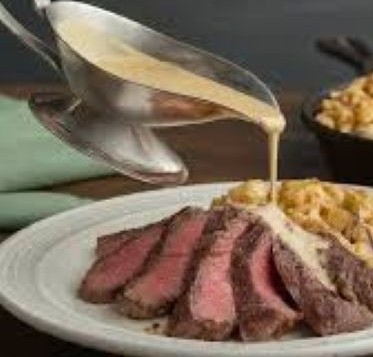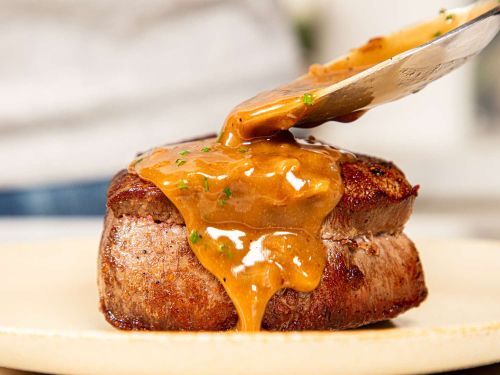
Red Wine Sauce

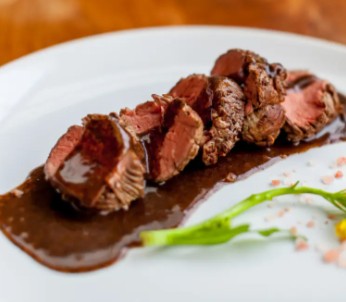
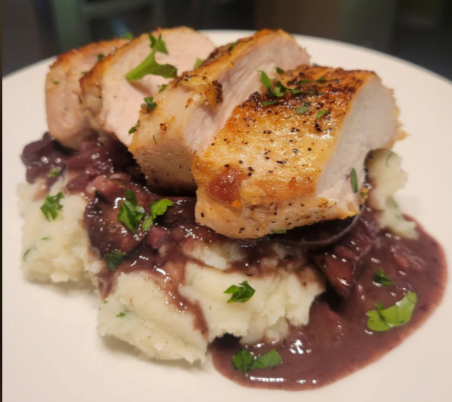
Deliciously rich red wine sauce as an accompaniment to steak. Easy to make – cook it while steaks are resting then drizzle over. Goes well with chicken too.

Ingredients

  • 2 tbsp butte
  • 1/2 small onion finely chopped
  • 1 tsp plain flour
  • 1 tbsp red wine vinegar
  • 150ml red wine
  • 200ml chicken or beef stock

Method

  1. On medium heat add half the butter and the shallots and sizzle for 2 mins to soften.
  2. Stir in the flour and cook to a lump free paste, then add the vinegar and bring to a simmer.
  3. Pour in the wine and stir, scraping any sticky bits off the bottom of the pan.
  4. Whisk in the mustard and then the stock.
  5. Simmer the sauce down to about 200ml in total, then taste and season.
  6. Whisk in the remaining butter, plus any resting juices from the steaks (or chicken).
  7. Serve the steaks on warm plates and spoon the sauce over the top.

Variations

  • Goes well with grilled or roast chicken.
  • Add sliced mushrooms.
  • Add 1 level tsp of tomato paste.
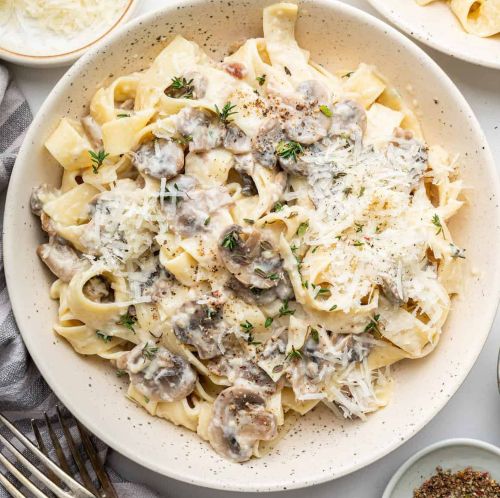
  • Try it with pasta and parmesan.

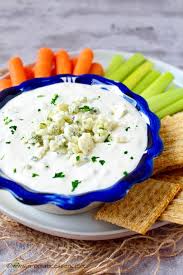
Blue Cheese Sauce

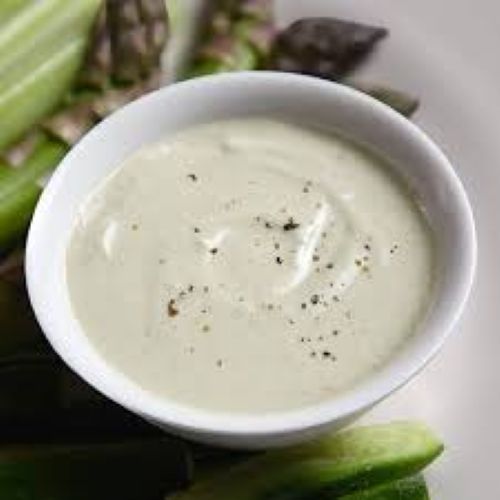
This classic blue cheese sauce comes together in under 5 minutes with just 4 ingredients. Loaded with blue cheese flavor and great for salads, steaks, fries, it’s perfectly balanced.

Ingredients

  • 25g butter
  • 1 tbsp flour or 1/2 tsp corn flour in milk
  • 150ml milk
  • 50g stilton (or other blue cheese), chopped or crumbled

Method

  1. Melt the butter in a pan over a medium heat
  2. Stir in the flour slowly and let cook for 1 min or so.
  3. Gradually pour in the milk, stirring constantly, until the sauce is smooth 
  4. Bring the mixture to a simmer,
  5. If using corn flour add AFTER bringing the milk to a simmer.
  6. Stir in the cheese.
  7. Cook until the cheese has melted and the sauce has thickened slightly.
  8. Season to taste and serve.

Substitute for Tarragon

The best substitute for tarragon vinegar is white wine vinegar mixed with fresh or dried tarragon. Use 1 cup of white wine, cava or apple cider vinegar combined with 1 tablespoon of fresh tarragon leaves (bruised) or 1 teaspoon of dried tarragon.
Other alternatives include fennel fronds, chervil, or anise seed for a similar licorice taste.

How to Make Tarragon Vinegar

To make tarragon vinegar, pack 1/2 cup of fresh, bruised tarragon sprigs into a sterilized glass jar, pour over 2 cups of heated white wine vinegar, and seal.
Store in a cool, dark place for 1–2 weeks, then strain the herbs, optionally adding fresh sprigs to the final bottle.

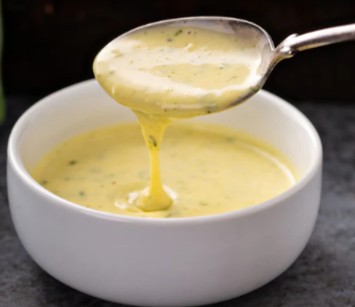
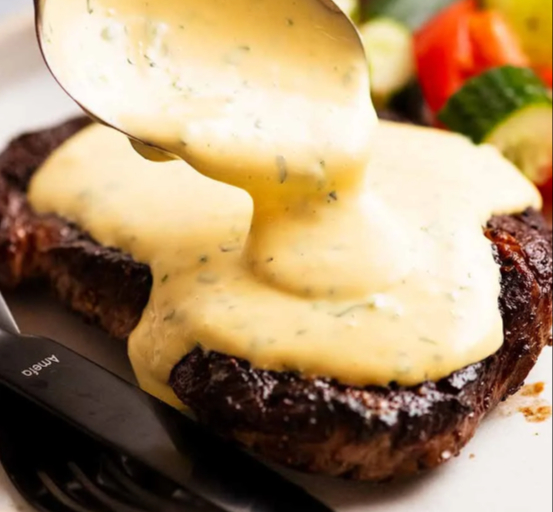
Béarnaise Sauce

Béarnaise Sauce has the same creaminess as the basic hollandaise but a subtle acidity from the vinegar. Béarnaise sauce’s flavours are much richer and more pronounced than a classic hollandaise.

Ingredients

3 egg yolks
100ml white wine or chicken broth
2 tablespoons tarragon vinegar
2 teaspoons minced shallot
2 teaspoons minced fresh tarragon, divided
8 whole peppercorns, crushed
1/2 cup butter

Method

  1. Cook wine, vinegar and onions in a pan over medium heat for 5-6 minutes until liquid is reduced to about 2 tbsp.
  2. Blend with yolks then with motor running, slowly add hot melted butter.
  3. Stir in tarragon and season.

Substitute for Tarragon

The best substitute for tarragon vinegar is white wine vinegar mixed with fresh or dried tarragon. Use 1 cup of white wine, cava or apple cider vinegar combined with 1 tablespoon of fresh tarragon leaves (bruised) or 1 teaspoon of dried tarragon.
Other alternatives include fennel fronds, chervil, or anise seed for a similar licorice taste.

How to Make Tarragon Vinegar

To make tarragon vinegar, pack 1/2 cup of fresh, bruised tarragon sprigs into a sterilized glass jar, pour over 2 cups of heated white wine vinegar, and seal.
Store in a cool, dark place for 1–2 weeks, then strain the herbs, optionally adding fresh sprigs to the final bottle.

4 Types of Fortified Wine for Cooking

To create a sweet fortified wine, winemakers add the spirit before fermentation ends. To create a dry fortified wine, they only add the spirit once fermentation has completed.

Yeast is the primary fermentation agent in most wines, transforming sugars in grape juice into ethanol (alcohol). Most table wines are around 12-14% ABV, so yeast can complete fermentation as long as the winemakers allow. Adding spirits to wine boosts the ABV.

Port

Originating from the Douro Valley in northern Portugal, port wine is one of the most popular types of fortified wine.

  • Ruby Port: A port with savory, herbaceous qualities.
  • Tawny Port: Barrel-aged port wine known for its notes of caramel and cashew.
  • White Port: Dry, sweet port made from late-harvest white grapes. A dry or sweet Port made from local white grapes.
  • Rose Port: Red wine port made with minimal maceration time for grape skins.
  • Vintage Port: Port cultivated from the harvest of a single year.

Port has a rich sweetness and depth that’s especially good in meat-based casseroles.

Fillet Mignon with Port Wine Sauce

Sherry

Similar to other fortified wines like vermouth, sherry is fortified with brandy and is typically 15-18% ABV. When it comes to sherry vs wine aging potential, sherry comes with a shelf life 4-5 times longer than similar red wines due to the brandy.

Sherry’s complex roasted nutty flavors can enhance just about any soup, stew, or sautéed dish

Vermouth

Vermouth is a fortified and aromatized wine that dates back to 18th century Turin, Italy. The main difference between vermouth and classic fortified wines such and port and sherry is that these wines are often flavoured with herbs and spices such as cloves, coriander and cinnamon. 

Masala and Madeira

Marsala is a fortified wine from the Marsala region in Sicily, Italy, characterized by smoky and nutty flavours.

Madeira is a suitable cooking alternative when you don’t have a bottle of Marsala on hand. It originates from the Madeira Islands of Portugal and is often served alongside fatty meats and savory semi-hard cheeses.

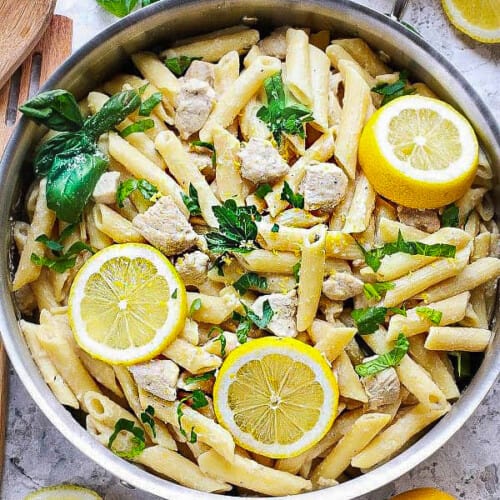
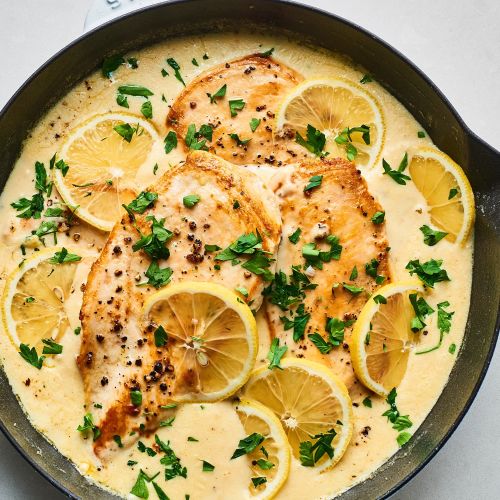
Easy Lemon Chicken

Canarian Recipes: Pollo al Limón Facil

A quick and easy recipe for sliced chicken breasts cooked in a lemon garlic sauce. Creamy Lemon Chicken Pasta uses cubed or sliced chicken with precooked pasta added last minute.

Ingredients 

Serves 3-4

  • 2 chicken breasts (sliced or cubed)
    Use chicken thighs for more juiciness.
  • 1 lemon (juice + zest)
  • 2 cloves of garlic
  • 1 tablespoon of olive oil
  • 100 ml of chicken stock (or water)
  • Black peppercorns, soaked (see below)
  • Cream, optional
  • Pasta, precooked, optional
  • Salt
  • Fresh herbs (optional)

How to Make

  1. Season the chicken breasts with salt and pepper.
  2. Add a little lemon zest to enhance the flavour.
  3. In a hot pan with oil, cook the chicken over medium-high heat until golden on both sides.
  4. Stir in the chopped garlic and cook for about 30 seconds.
  5. Add the peppercorns, lemon juice and chicken stock.
  6. Lower the heat and allow to reduce for about 5-7 minutes.
  7. When the sauce thickens slightly, sprinkle with fresh herbs and serve hot.

Lemon Chicken Pasta

If serving with pasta, add precooked pasta and optional cream after step 6 and heat gently.

Variation 

Add cream before serving and heat gently.

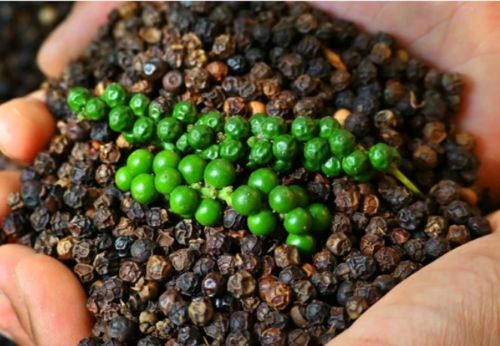
Soaking Peppercorns

Soak dried peppercorns for 20 to 30 minutes or more, in wine, liquor, vegetable, chicken stock or water to rehydrate them and infuse them with new flavors. 

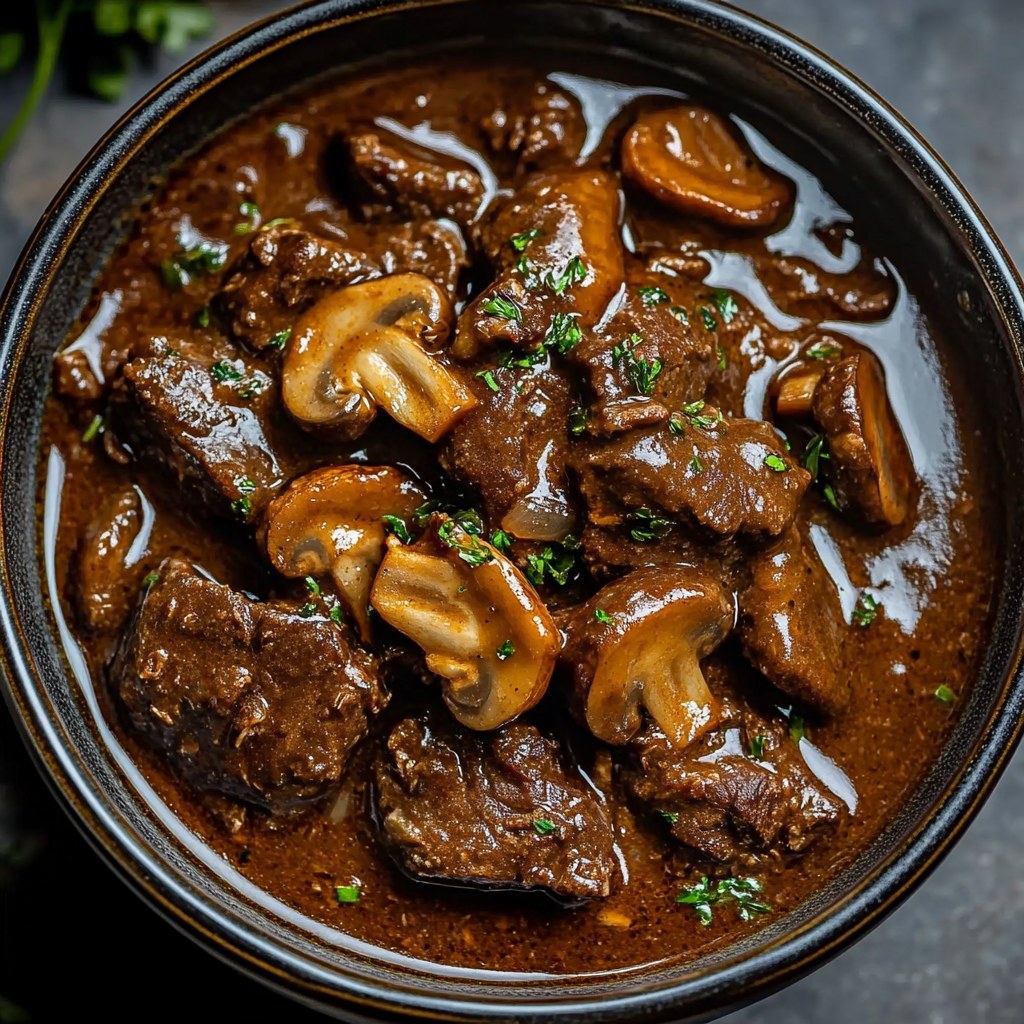
Beef and Mushroom Casserole

An extremely versatile beef and mushroom recipe. Oven, Air Fryer, Instant Pot.
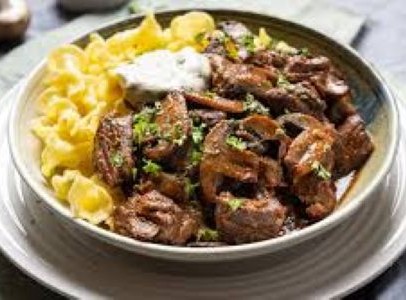
Serve with mash, pasta, rice fries, carrot/potato mash.
Make ahead with mash topping.

Ingredients

  • 3 tbsp vegetable oil
  • 1½kg braising beef cut into 3.5cm pieces
  • 4 large onions thickly sliced
  • 3 tbsp plain flour or 2 tbsp corn flour in water.
  • 500ml dark beer (or red wine/stock mix)
  • 800ml beef stock
  • 450g button mushrooms halved
  • herbs to taste
  • handful parsley to serve, optional

Instructions

  1. Heat oven to 170C/150C air fryer.
  2. In a large pan on high heat and add 1 tbsp oil.
  3. Season the beef and brown in batches until well coloured on both sides, making sure you don’t overcrowd.
  4. Remove each batch and set aside on a plate.
  5. Add the remaining oil to the pan and lower the heat to medium. Toss in the onions and cook for about 10 mins until softened and golden brown.
  6. Stir in the flour and cook, stirring, for 1-2 mins.
  7. Add the beer and stir well to deglaze the pan, scraping up any sticky bits.
  8. Return the beef to a casserole dish, pour in the stock and add herbs.
  9. Bring to a simmer then put the lid on, transfer to the oven and cook for 1 to 1½ hrs.
  10. Add the mushrooms to the casserole, stir well and return to the oven for a further ½ to 1 hr.
  11. Season to taste and stir in half the chopped parsley. Scatter over the remaining parsley to finish.
  12. Serve with mash, pasta, fries, rice.
  13. Serve gravy separately, optional.

Note: Cuts of beef vary enormously and affect texture and cooking time. Choose a cut with fat, not too lean, and don’t worry about a little gristle.

Instant Pot 

  1. Use Saute Option to brown meat, onions, etc.
  2. DO NOT thicken at this stage.
  3. Pressure cook on medium for 40 minutes.
  4. Quick release and add mushrooms.
  5. Pressure cook 5 minutes with quick release.
  6. Thicken while warm using SAUTE of needed.


Easter Eggs Canarian Style

Canarian Recipes: Huevos de Pascua Caseros

Easter eggs are one of the sweetest and most iconic symbols of Easter Sunday, a celebration that signifies rebirth and joy following Holy Week. Traditionally, the egg has represented new life, and over time it has evolved into delicious chocolate creations that are now a part of this festivity in many countries, including the Canaries.

Ingredients

  • Chocolate (dark, milk, or white)
  • Easter egg moulds
  • Decorations: sprinkles, candies, nuts, etc.
  • Fillings: sweets, cream, surprises (Optional)

Tips

  • Use high-quality chocolate for better flavour and finish
  • Avoid overheating the chocolate 
  • If you desire shine, consider tempering the chocolate

Tempering chocolate is the process of melting, cooling, and reheating chocolate to stabilize cocoa butter crystals, resulting in a shiny, snap-able finish that sets properly. It is crucial for candy dipping and molding. The essential method involves melting 2/3 of the chocolate, then using the remaining 1/3 as “seed” to cool it.

Preparation

  1. Melt the chocolate using a double boiler or microwave (in short intervals, stirring).
  2. Pour the melted chocolate into the moulds, ensuring it covers the entire surface.
  3. Place the moulds in the fridge for about 15–20 minutes until the chocolate is firm.
  4. To make the egg sturdier, add another layer of chocolate and refrigerate again.
  5. Carefully remove the halves from the mould.
  6. Place surprises inside and join the two halves with a bit of melted chocolate.
  7. Add colours, designs, or details to your liking.

Decoration Ideas

  1. White chocolate stripes over dark chocolate
  2. Faces or figures made with fondant
  3. Pastel colours with dyed sugar
  4. “Drip” style (drizzled)

Adeje Chicken with Canarian Potatoes

Canarian Recipes: Pollo Adeje con papas arrugadas

Adeje chicken is a famous Tenerife dish, typically featuring crispy fried chicken. Instead of being deep-fried, this chicken is marinated for up to two days in homemade mojo sauce and then roasted in the oven so the meat is juicy and the skin is crispy.

Ingredients 

  • 1 whole chicken or 8 chicken thighs or legs
  • Canarian mojo sauce
  • Wrinkled potatoes

Mojo Sauce

  • 2 large red peppers roughly chopped
  • 4 large cloves of garlic, chopped
  • 3 small chillies, deseeded and chopped finely
  • 2 tsp sea salt
  • 2 tbsp red wine vinegar
  • 4 tbsp olive oil
  • 1 tsp ground cumin
  • 1 slice of stale bread torn into small pieces

How to Make

  1. Heat the oven to 220°C Fan for at least 15 minutes before cooking.
  2. Make the sauce by placing all the ingredients in a blender.
  3. Blend until all the ingredients have broken down into a thick sauce.
  4. Place the chicken in a large baking tin or dish and thickly brush on some of the sauce.
  5. Cover with cling film and marinate in the fridge for at least 8 hours or up to 2 days.
  6. Remove the cling film and place the chicken in the oven.
  7. Lower the heat immediately to 190°C.
  8. Cook for 45 minutes to 1 hour making sure that the chicken is cooked through.
  9. After 30 minutes remove the chicken from the oven and pour off the juices in the bottom of the tray.
  10. Cover with the remaining sauce and return the chicken to the oven.
  11. If the dish seems to be browning too much, cover with foil to finish the cooking.
  12. Leave to rest for at least 15 minutes.
  13. Serve with a green salad and Canarian potatoes.

Canarian Potatoes.

  1. Use only small potatoes and wash them thoroughly.
  2. Place potatoes in a pot. cover with water.
  3. Add 2 tablespoons of sea salt.
  4. Boil for about 20 minutes until tender.
  5. Pour off most of the water and return to heat.
  6. Keep moving the potatoes around as the water evaporates.
  7. You will see the salt appear on the potatoes.

One Pan Bacon and Egg Toasty

All cooked in one pan, deliciously crisp and melty bacon and egg toasty with cheese – the perfect breakfast. Lettuce and tomatoes optional.

Ingredients

  • 4-5 thin steaks of bacon
  • 2 slices of ​​cheese
  • 1 large or 2 medium eggs beaten
  • 2 slices of bread
  • Lettuce (optional)
  • Tomato sliced (optional)
  • Salt and pepper
  • Frying oil

Instructions

Lagunero Sardine Sandwiches

Canarian Recipes: Bocadillos De Sardinas

A Classic of San Cristóbal de La Laguna, this traditional dish is particularly popular during Holy Week, offering a straightforward yet authentic taste of Lent.

Ingredients 

1–2 sandwiches

  • 1 can of sardines (preferably in olive oil)
  • 1 crusty baton (bread)
  • 1 clove of garlic
  • Fresh parsley, herbs (or dried if necessary)
  • A splash of the oil from the can
  • Halved or Sliced tomato (optional)
  • Green mojo sauce or red mojo sauce (highly recommended)
  • Salt (a small amount, as the sardines are already salty)

Method

  1. Open the can and drain a little oil (save some for later).
  2. Leave the sardines whole (more traditional) or slightly flake them
  3. Pound or mix together: Garlic, Parsley, A bit of the oil from the can
  4. Open the bread
  5. Spread a bit of oil or mojo
  6. Add the sardines
  7. Top with the garlic mixture
  8. Optionally, add the tomato and a splash of mojo

Tips

Lightly warm the bread – enhances the flavor
Red mojo = stronger / Green mojo = fresher
A few drops of lemon add an incredible touch
If you prefer, add thinly sliced onion (not traditional, but delicious)