
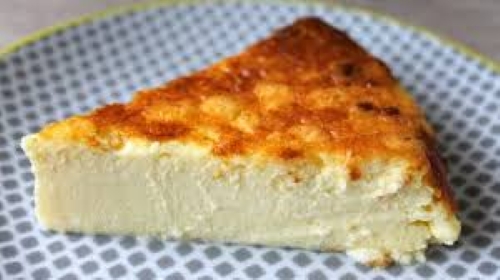
While many variations exist worldwide, the creamy version that has become particularly famous in Spain is characterised by its minimal ingredients and a baking process that leaves the center incredibly moist.
Ingredients
- 500 g cream cheese (such as Philadelphia)
- 200 ml double cream (35% fat)
- 150 g sugar
- 3 large eggs
- 1 tablespoon flour or cornstarch (optional, for stability)
- 1 teaspoon vanilla extract (optional)
- Butter or baking paper for the tin
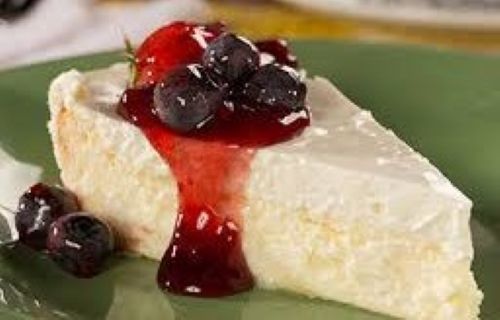
Method
- Preheat the oven to 200 °C with both top and bottom heat.
- Line a round cake tin (20–22 cm) with baking paper. You may crumple the paper slightly to help it fit better.
- In a large bowl, combine the cream cheese and sugar. Mix until creamy and smooth.
- Add the eggs one at a time, mixing thoroughly after each addition.
- Mix in the double cream, vanilla, and flour or cornstarch if you choose to use it. Blend until the mixture is homogeneous.
- Pour the mixture into the prepared tin and bake for 35–40 minutes. The surface should be golden, and the centre should still be slightly wobbly.
- Leave to cool at room temperature, then refrigerate for at least 4 hours (preferably overnight) to achieve a creamier texture.
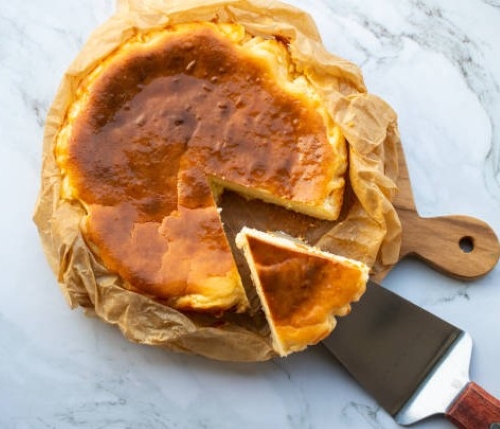
Tips
Do not overbake the cheesecake: the center should remain slightly wobbly when taken from the oven.
Use cream cheese at room temperature to avoid lumps.
For an even creamier texture, you may omit the flour from the recipe.
Add a little more flour (or gelatin) and bake less to reduce browning.
Unflavored gelatin is an excellent substitute for corn flour (cornstarch) to thicken liquids, custards, fillings, and puddings. Use a 1:1 ratio, but dissolve it in water first to prevent clumping. Gelatin creates a smoother, clearer set rather than a starchy texture.